International agricultural procurement is becoming increasingly interconnected. Importers, wholesalers, distributors, and food businesses often don’t look for a single commodity from a single supplier. Instead, many businesses seek sourcing relationships that can give them access to several products through an organized supply network.
This creates an interesting opportunity for Non-Basmati rice exporters in India.
Non-Basmati rice is already an important category within India’s agricultural export ecosystem. However, its value for international buyers can extend beyond the rice itself. India’s broad agricultural production base enables businesses to explore multiple commodities through interconnected sourcing channels.
For an importer, this approach can create a more organized procurement strategy while opening opportunities to source rice alongside other Indian agricultural products.
Why Non-Basmati Rice Can Be Part of a Broader Sourcing Strategy
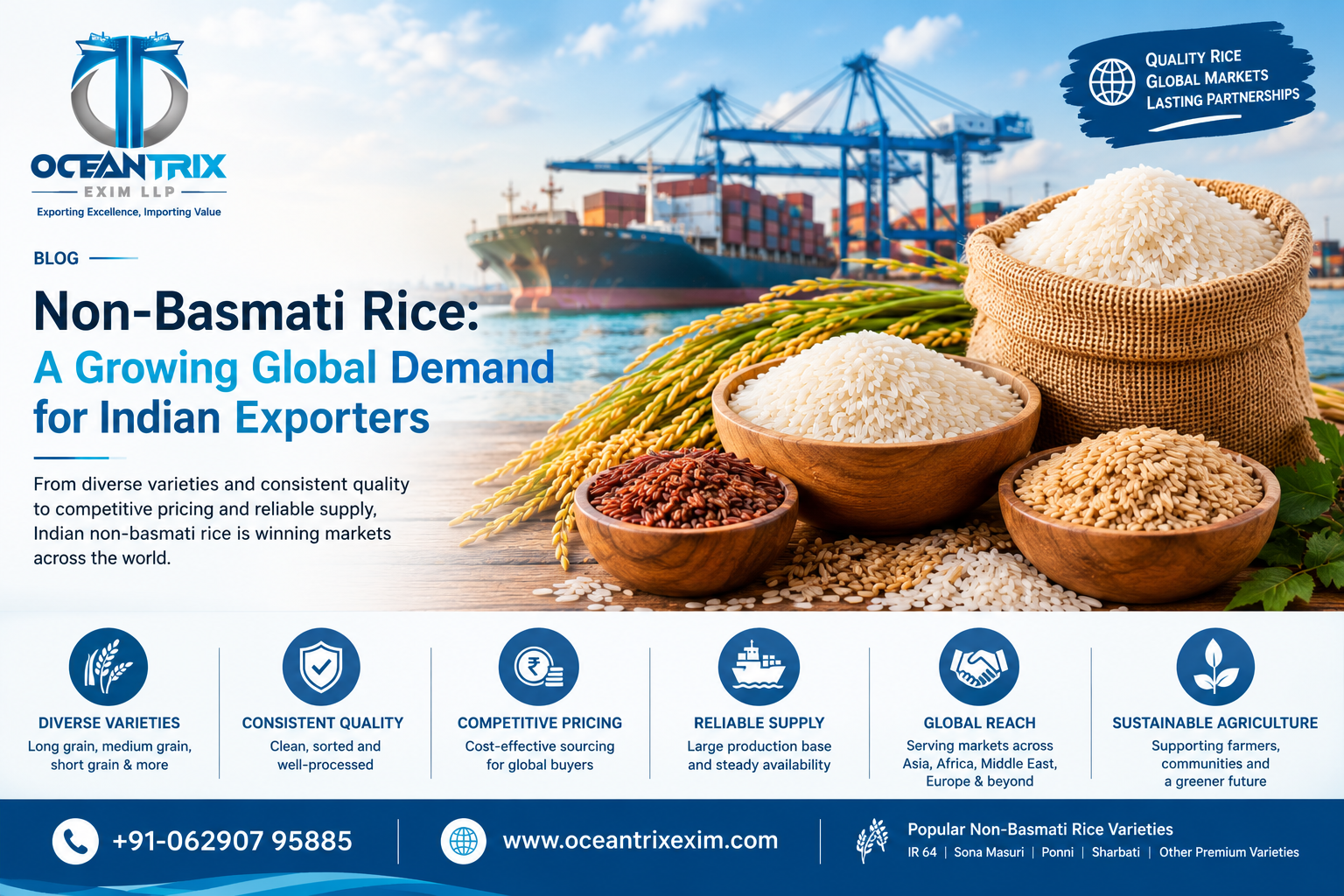
Non-Basmati rice covers a broad range of commercial requirements. International markets can have different preferences regarding rice varieties, grain characteristics, processing, pricing, and supply volumes.
Because India produces a wide range of agricultural commodities, buyers interested in rice may also have sourcing requirements for pulses, spices, cereals, oilseeds, tea, coffee, and other products. India’s agricultural diversity is a key strength of its export ecosystem.
This means a buyer does not necessarily have to view rice procurement as an isolated activity.
Instead, non-Basmati rice suppliers in India can become part of a wider agricultural sourcing strategy, depending on the buyer’s requirements and the exporter’s product network.
The Concept of Consolidated Agricultural Sourcing
Imagine an international distributor that needs rice as well as pulses and spices for different sections of its product portfolio.
Instead of managing completely separate sourcing processes for every commodity, the buyer may explore an export partner capable of coordinating access to multiple agricultural categories.
This concept can be described as consolidated sourcing.
The objective is not necessarily to purchase every commodity from one supplier. Rather, it is about creating a more coordinated procurement structure where appropriate.
For international businesses, this can help simplify supplier communication and make procurement planning more organized.
India’s extensive agricultural product range makes this model particularly relevant to businesses exploring long-term sourcing relationships.
Non-Basmati Rice as a Volume-Oriented Product Category
Non-Basmati rice can serve buyers with requirements that differ from premium specialty rice procurement.
International importers may evaluate products according to their target market, customer expectations, commercial requirements, and available budget. This makes non-Basmati rice relevant to a broad range of sourcing strategies.
For exporters, the ability to understand these different requirements is important.
A professional rice exporter in India needs to understand that international buyers may not simply ask for “rice.” They may have particular expectations concerning the product category, specifications, quantity, packaging, delivery schedule, and commercial terms.
Clear communication at the beginning of the procurement process can therefore help both parties establish a more efficient transaction.
Combining Rice With India’s Agricultural Product Portfolio
One of India’s major strengths is the diversity of its agricultural output.
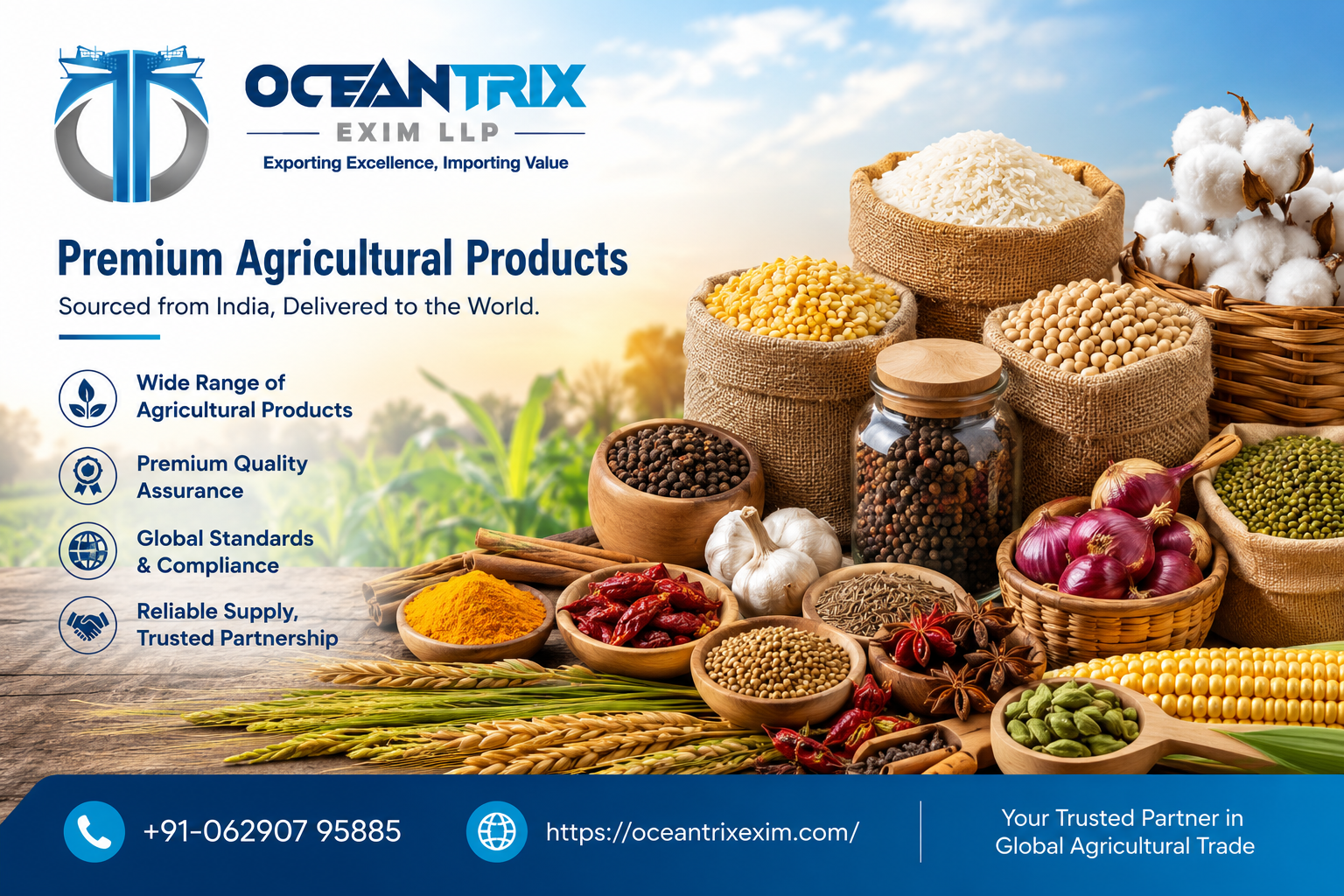
The country produces and exports products across categories such as cereals, pulses, spices, oilseeds, tea, coffee, sugar, cotton, fruits, and vegetables.
For an international buyer, this creates opportunities to develop a broader procurement relationship.
For example, a business initially sourcing non-Basmati rice may later investigate other products based on market demand. An exporter with suitable supplier relationships can potentially support this expansion.
This is particularly relevant for companies that distribute multiple food products rather than specializing in one commodity.
Why Supplier Coordination Matters
Multi-commodity procurement introduces another important consideration: coordination.
Different agricultural products can involve different suppliers, processing requirements, specifications, packaging formats, and shipment arrangements.
A capable export company can help organize communication between the buyer and relevant suppliers.
This does not eliminate the need for product-specific quality requirements. Instead, it creates a structured commercial channel through which different procurement requirements can be managed.
For international buyers, having a consistent point of communication can make discussions around quotations, product specifications, documentation, and shipment planning more straightforward.
Building a Flexible Import Portfolio
International food markets can change over time. Consumer preferences, purchasing patterns, supply conditions, and business requirements can all influence what importers need.
A diversified sourcing strategy can give businesses greater flexibility when responding to these changes.
Non-Basmati rice can form one component of such a portfolio.
An importer may maintain regular rice procurement while periodically exploring additional agricultural commodities. This creates opportunities to adapt the product portfolio according to market requirements rather than depending entirely on one product category.
For Indian rice exporters, this also creates an opportunity to demonstrate broader knowledge of India’s agricultural export capabilities.
India’s Export Infrastructure Supports Wider Trade
A multi-commodity sourcing model also depends on an effective export ecosystem.
India has developed transportation networks, warehousing facilities, major ports, containerized transportation, and other infrastructure supporting international agricultural trade. These capabilities help exporters move agricultural products from sourcing locations toward global markets.
For an overseas buyer, the availability of established logistics infrastructure provides an important foundation for international procurement.
However, each product and shipment still requires appropriate planning, documentation, packaging, and logistics coordination.
What International Buyers Should Discuss With an Exporter
Before developing a multi-product sourcing relationship, buyers should clearly communicate their requirements.
Important discussion points can include:
- Required non-Basmati rice variety
- Expected order volume
- Product specifications
- Packaging preferences
- Target destination
- Required documentation
- Expected shipment schedule
- Other agricultural commodities of interest
- Long-term procurement expectations
Clear requirements allow exporters to better understand the buyer’s business model and identify appropriate sourcing possibilities.
For a rice importer, this initial communication can be particularly valuable when the intention is to develop recurring procurement rather than complete a single transaction.
OceanTrix Exim LLP and India’s Agricultural Export Network
OceanTrix Exim LLP focuses on connecting Indian agricultural products with international business requirements. The company’s positioning around “Exporting Excellence, Importing Value” reflects its focus on creating value through international trade relationships.
For businesses searching for non-Basmati rice exporters in India, rice can serve as an entry point into India’s wider agricultural sourcing ecosystem.
Depending on buyer requirements, businesses can explore opportunities across multiple agricultural categories while maintaining a structured approach to international procurement.
The broader objective is to connect global buyers with Indian agricultural capabilities through dependable sourcing and professional export coordination.
The Future of Agricultural Sourcing From India
International agricultural trade is increasingly about relationships rather than isolated transactions.
A buyer may initially require a specific rice product but eventually develop a broader sourcing strategy as its business grows. An exporter that understands both the individual commodity and the wider agricultural ecosystem can become a useful connection between international demand and Indian supply.
Non-Basmati rice is particularly relevant to this discussion because of its broad commercial presence and India’s significant agricultural production capabilities.
The opportunity therefore extends beyond simply exporting rice. It involves creating structured connections between producers, exporters, importers, distributors, and international markets.
Conclusion
Non-Basmati rice remains an important part of India’s agricultural export landscape, but its role can extend beyond individual rice transactions.
For international businesses, combining rice procurement with broader agricultural sourcing can create opportunities to build a more organized import strategy. India’s diverse agricultural production gives buyers access to multiple commodity categories, while established export infrastructure supports connections with global markets.
For Non-Basmati rice exporters in India, this creates an opportunity to develop relationships based not only on individual shipments but also on broader sourcing requirements.
OceanTrix Exim LLP aims to connect international businesses with India’s agricultural export opportunities, helping create trade relationships centered around sourcing, coordination, and long-term commercial value.
OceanTrix Exim LLP — Exporting Excellence, Importing Value.