Rice is one of the world’s most important staple foods, serving millions of consumers across Asia, the Middle East, Africa, Europe, and North America. As international demand continues to evolve, importers are looking for more than competitive pricing. They need consistent quality, dependable supply, efficient logistics, and an export partner capable of supporting long-term business relationships.
India has established itself as a major global source of rice because it combines large-scale agricultural production with extensive product diversity and export expertise. From premium Basmati rice to non-Basmati varieties, Indian rice exporters serve a wide range of international requirements.
For businesses looking for dependable agricultural sourcing, understanding India’s strengths can help them make better procurement decisions.
India’s Strong Rice Production Base
India has a diverse agricultural landscape that supports rice cultivation across several regions. Favorable climatic conditions, fertile agricultural land, experienced farmers, and established farming networks contribute to significant production capacity.
This large production base is particularly valuable for international buyers purchasing rice in bulk. Importers often require consistent volumes over multiple shipments, making supply reliability an important consideration when selecting a rice exporter.
The scale of India’s agricultural sector also creates opportunities for exporters to serve different market segments. Buyers can source premium varieties for retail and specialty markets while also procuring larger volumes for food-service, wholesale, and distribution requirements.
Basmati Rice: A Globally Recognized Indian Product
Basmati rice is one of India’s most recognized agricultural exports. It is valued for its long grains, distinctive aroma, texture, and cooking characteristics.
International demand for Indian Basmati rice remains strong across markets such as the Middle East, Europe, North America, and other regions. Buyers serving premium food markets often seek reliable suppliers capable of maintaining consistency across shipments.
For an importer, working with an experienced Basmati rice exporter can provide advantages beyond product availability. Proper sourcing, quality checks, packaging, documentation, and shipment coordination all contribute to a smoother international procurement process.
OceanTrix Exim LLP supports businesses seeking dependable agricultural sourcing solutions and access to India’s internationally demanded rice products.
Non-Basmati Rice for Diverse Global Requirements
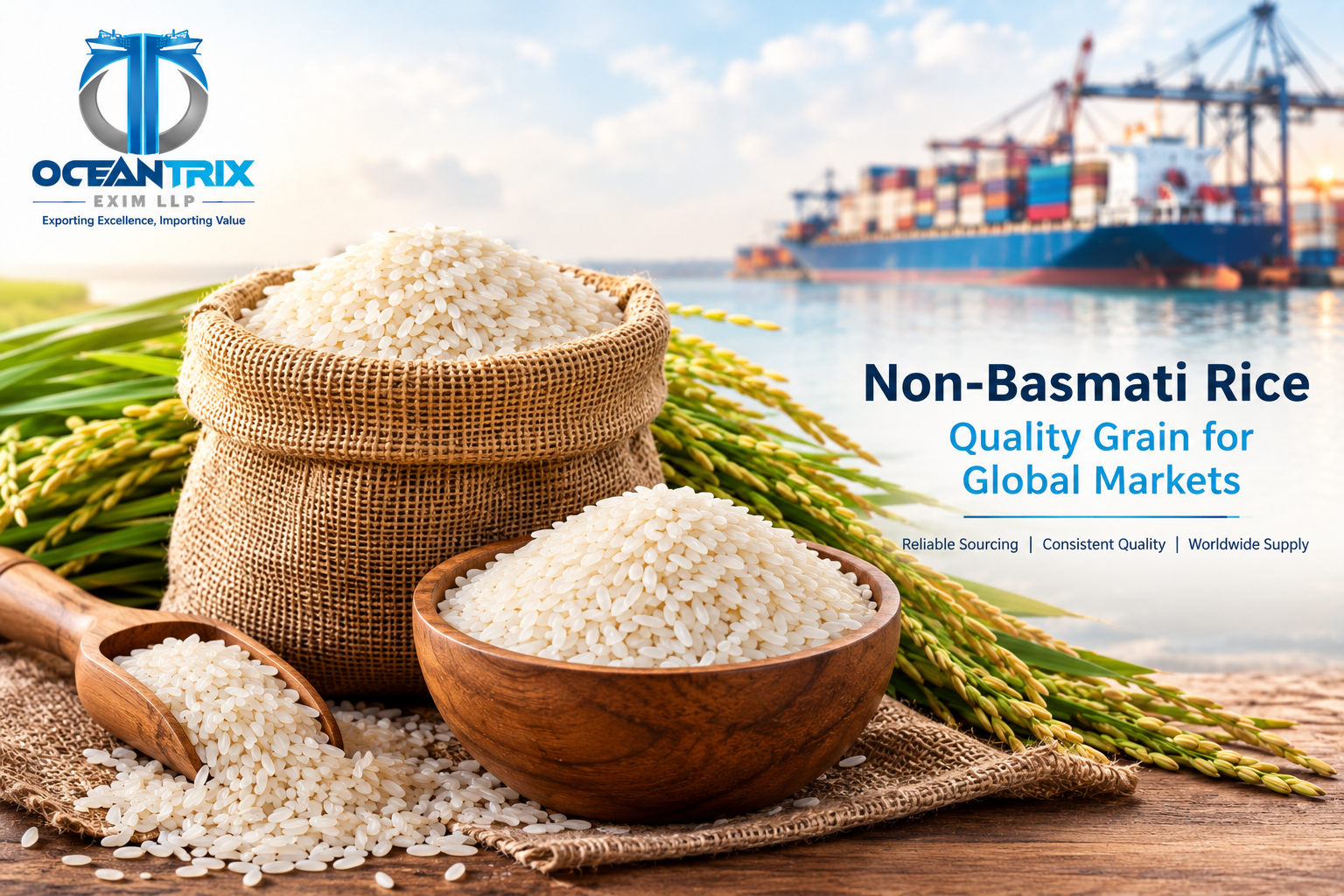
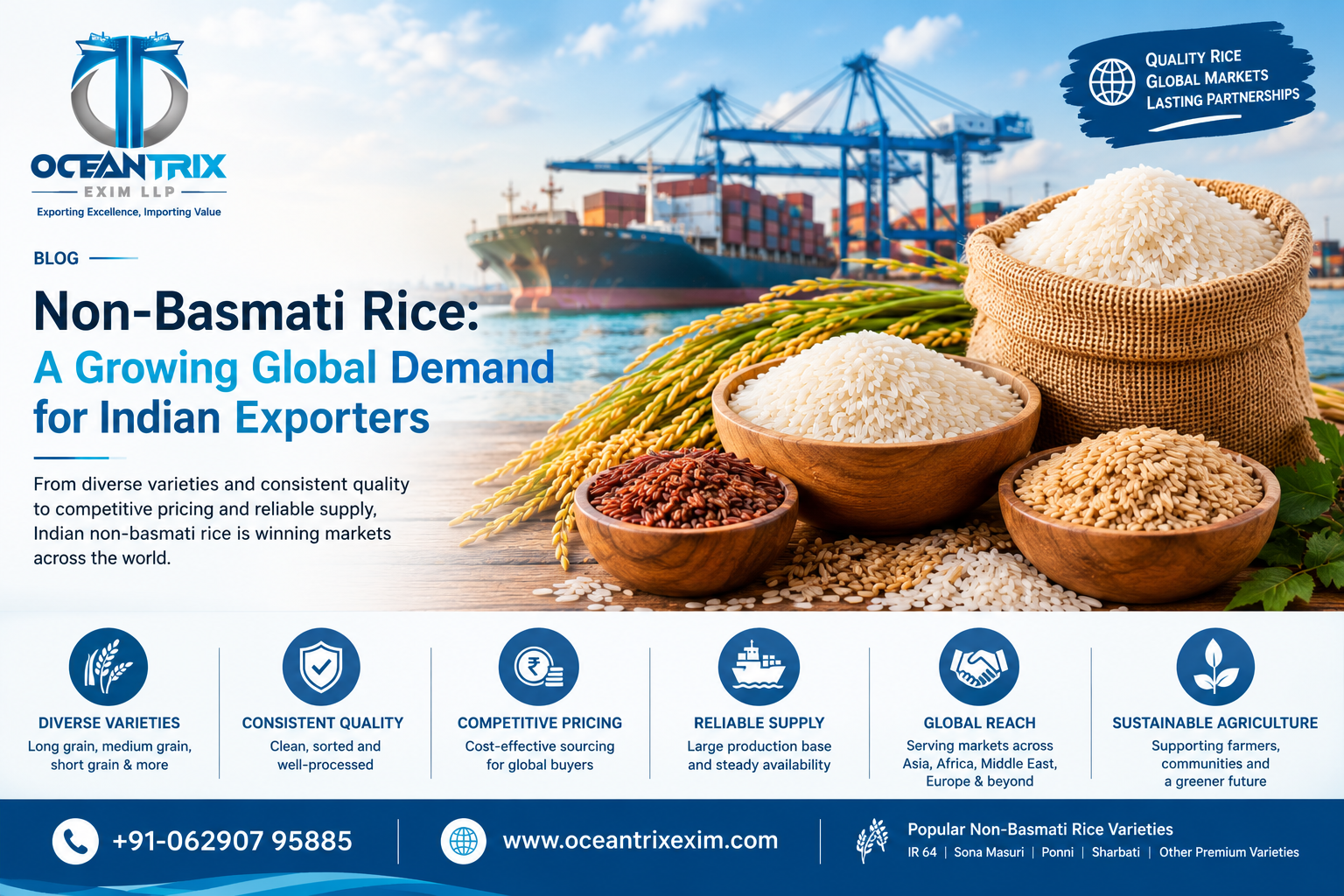
India’s rice export strength is not limited to Basmati. Non-Basmati rice represents another important category for international buyers.
Different markets have different preferences regarding grain characteristics, processing, packaging, pricing, and cooking performance. Non-Basmati varieties can therefore serve a broad range of commercial requirements.
For wholesalers, food distributors, institutional buyers, and international trading companies, access to different rice categories allows procurement strategies to be developed around specific customer needs.
A capable Indian rice exporter can help buyers identify suitable products, coordinate sourcing, and manage the export process from origin to destination.
Quality Is Central to International Rice Trade
For global importers, quality consistency is one of the most important factors when selecting a supplier. A competitive price has limited value if product quality varies significantly between shipments.
Rice intended for international markets must be appropriately handled, processed, packed, and prepared for transportation. Quality-focused exporters work with suppliers and processing facilities to maintain consistency throughout the supply chain.
Important considerations can include grain appearance, cleanliness, moisture management, packaging requirements, and overall product consistency.
For long-term buyers, establishing clear quality expectations before shipment can reduce misunderstandings and create stronger supplier relationships.
This is why choosing an experienced rice exporter in India can be an important part of building a dependable international sourcing strategy.
Competitive Sourcing for International Buyers
Cost efficiency is another reason businesses consider India for agricultural sourcing. Large-scale agricultural production and established processing and logistics networks can create competitive sourcing opportunities.
For importers purchasing rice in commercial quantities, sourcing directly through an established exporter can help simplify procurement and improve supply coordination.
However, the lowest price should not be the only consideration. International buyers also need to evaluate product quality, documentation, communication, shipment reliability, packaging, and supplier responsiveness.
The best import-export partnerships are built around overall value rather than price alone.
Reliable Export Logistics and Documentation
International rice trade involves more than moving products from a farm or processing facility to a port. Exporters must coordinate multiple stages of the supply chain.
These can include procurement, processing, packaging, warehousing, transportation, documentation, port handling, and international shipment coordination.
Efficient logistics can help reduce delays and improve shipment visibility. Proper documentation is equally important because international trade requires accurate commercial and shipping information.
An experienced rice exporter in India understands the importance of coordinating these activities and communicating effectively with overseas buyers.
For importers, working with an exporter capable of managing these operational requirements can make international procurement significantly easier.
Why Global Buyers Prefer Established Indian Exporters
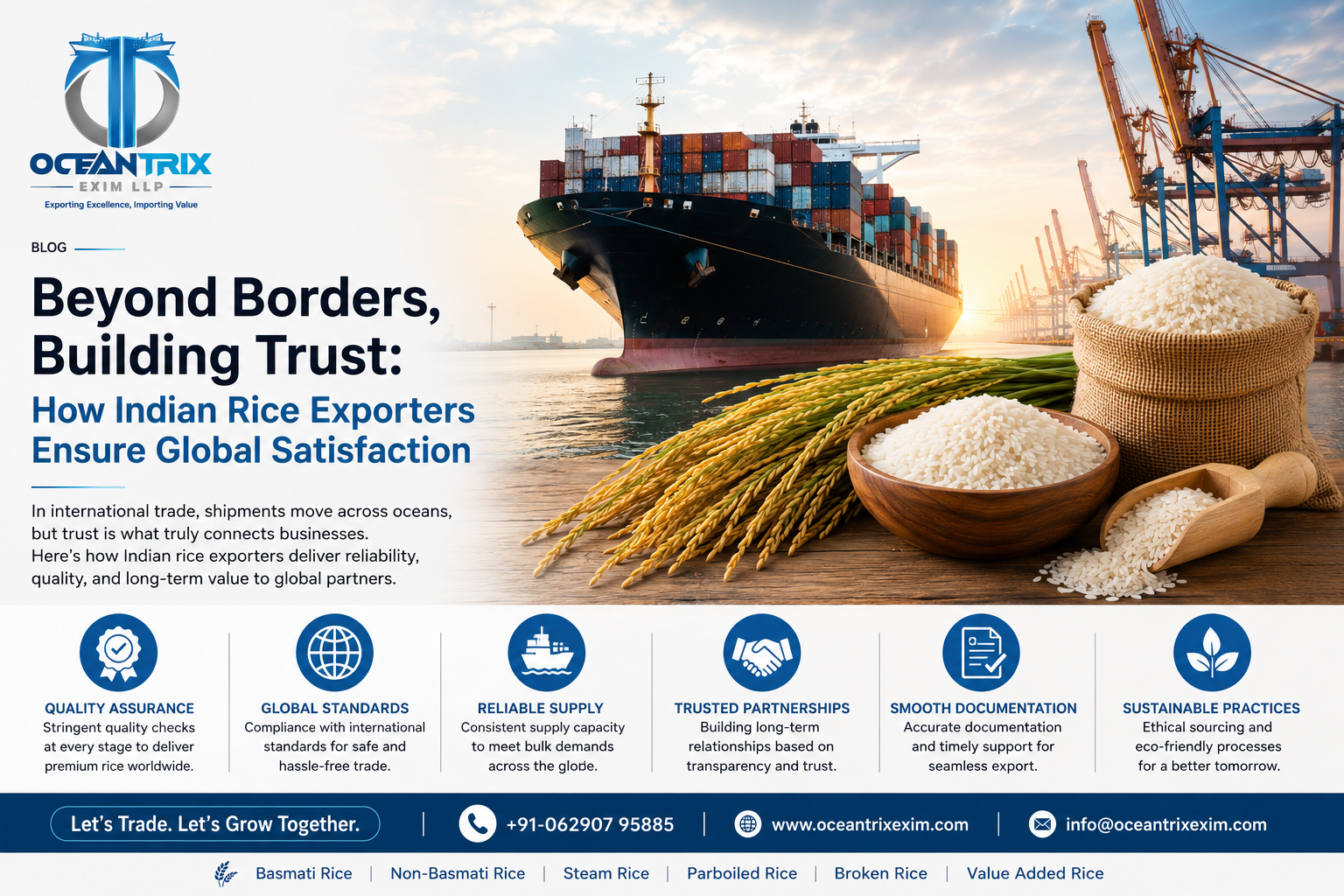
Choosing the right supplier is an important decision for any international buyer. A reliable exporter should be able to demonstrate consistency, communication, product knowledge, and an understanding of international trade requirements.
Global buyers may evaluate several factors before establishing a partnership:
- Product quality and consistency
- Availability of required rice varieties
- Competitive commercial terms
- Packaging and labeling requirements
- Export documentation
- Shipment coordination
- Communication and responsiveness
- Ability to support recurring orders
A supplier that performs consistently across these areas can become more than a one-time vendor. It can develop into a long-term sourcing partner.
OceanTrix Exim LLP: Connecting Indian Agriculture With Global Markets
OceanTrix Exim LLP operates with a focus on connecting quality agricultural products from India with international markets. Its approach is centered on dependable sourcing, quality-focused partnerships, efficient trade coordination, and long-term business relationships.
For businesses searching for an Indian rice exporter, the company provides an opportunity to explore sourcing solutions across India’s agricultural export ecosystem.
The combination of India’s agricultural capabilities and professional export coordination creates opportunities for importers seeking reliable supply relationships.
Whether a buyer is exploring Basmati rice, non-Basmati rice, or other agricultural commodities, having an experienced export partner can simplify the sourcing journey.
Building Long-Term Rice Import Partnerships
Successful international trade is rarely built around a single transaction. Long-term relationships depend on consistent communication, reliable quality, transparent coordination, and the ability to respond to changing market requirements.
For rice importers, establishing a relationship with a dependable Indian exporter can create a more stable sourcing channel. As requirements grow, buyers can also explore additional agricultural products through the same supplier network.
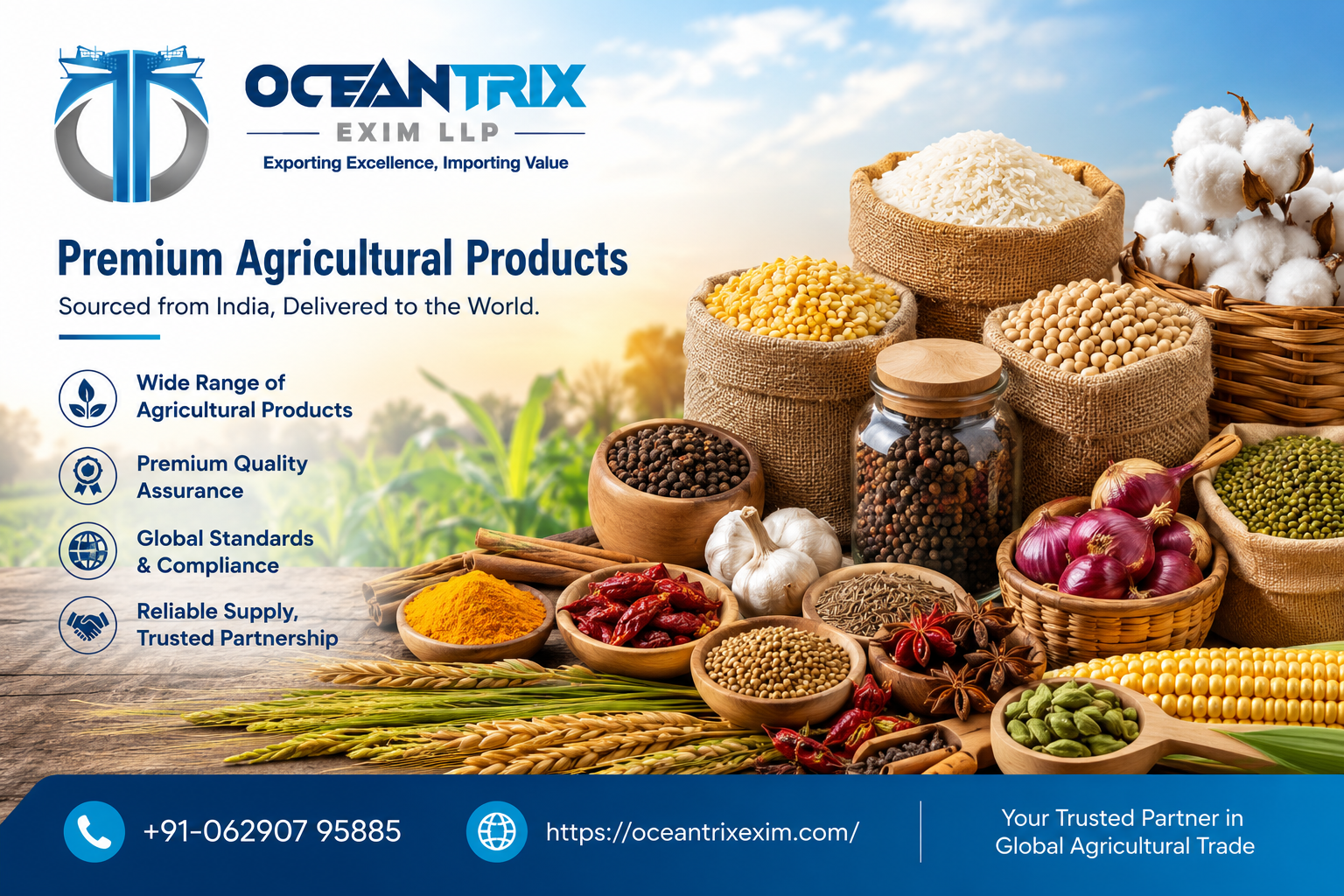
India’s diverse agricultural production provides an important foundation for this approach. Rice can become the starting point for broader sourcing opportunities involving pulses, spices, cereals, and other agricultural commodities.
Final Thoughts
India’s position in the global rice trade is supported by its strong agricultural foundation, product diversity, production capabilities, and established export infrastructure. Basmati and non-Basmati rice provide international buyers with options for different markets and commercial requirements.
However, successful sourcing depends on choosing the right export partner. Quality control, reliable supply, competitive sourcing, documentation, logistics, and communication all contribute to a successful international trade relationship.
For businesses seeking a dependable rice exporter in India, OceanTrix Exim LLP aims to bridge Indian agricultural excellence with global demand through quality-focused sourcing and professional export coordination.
As international food markets continue to develop, India’s rice export sector is positioned to remain an important part of the global agricultural supply chain.
OceanTrix Exim LLP — Exporting Excellence, Importing Value.