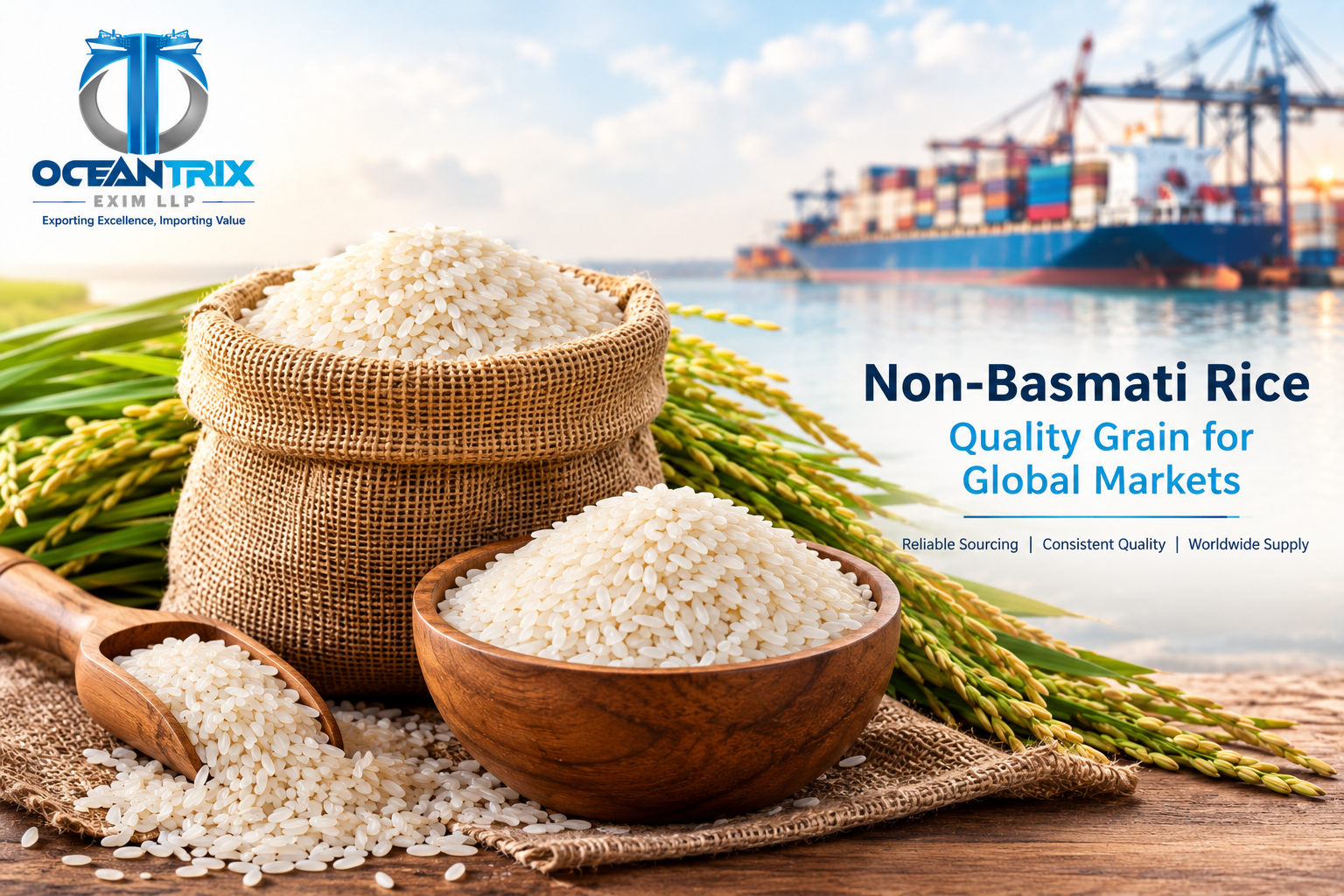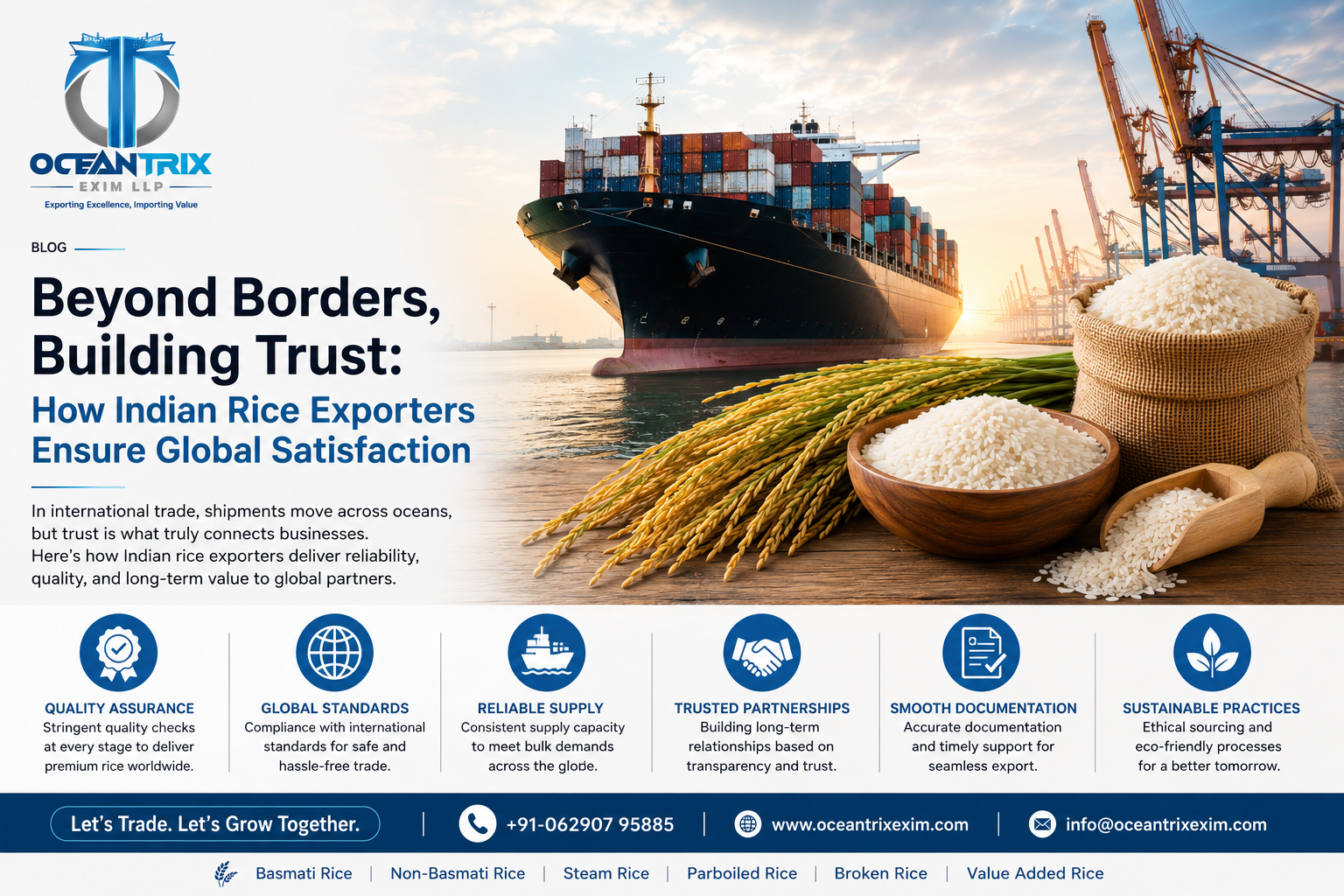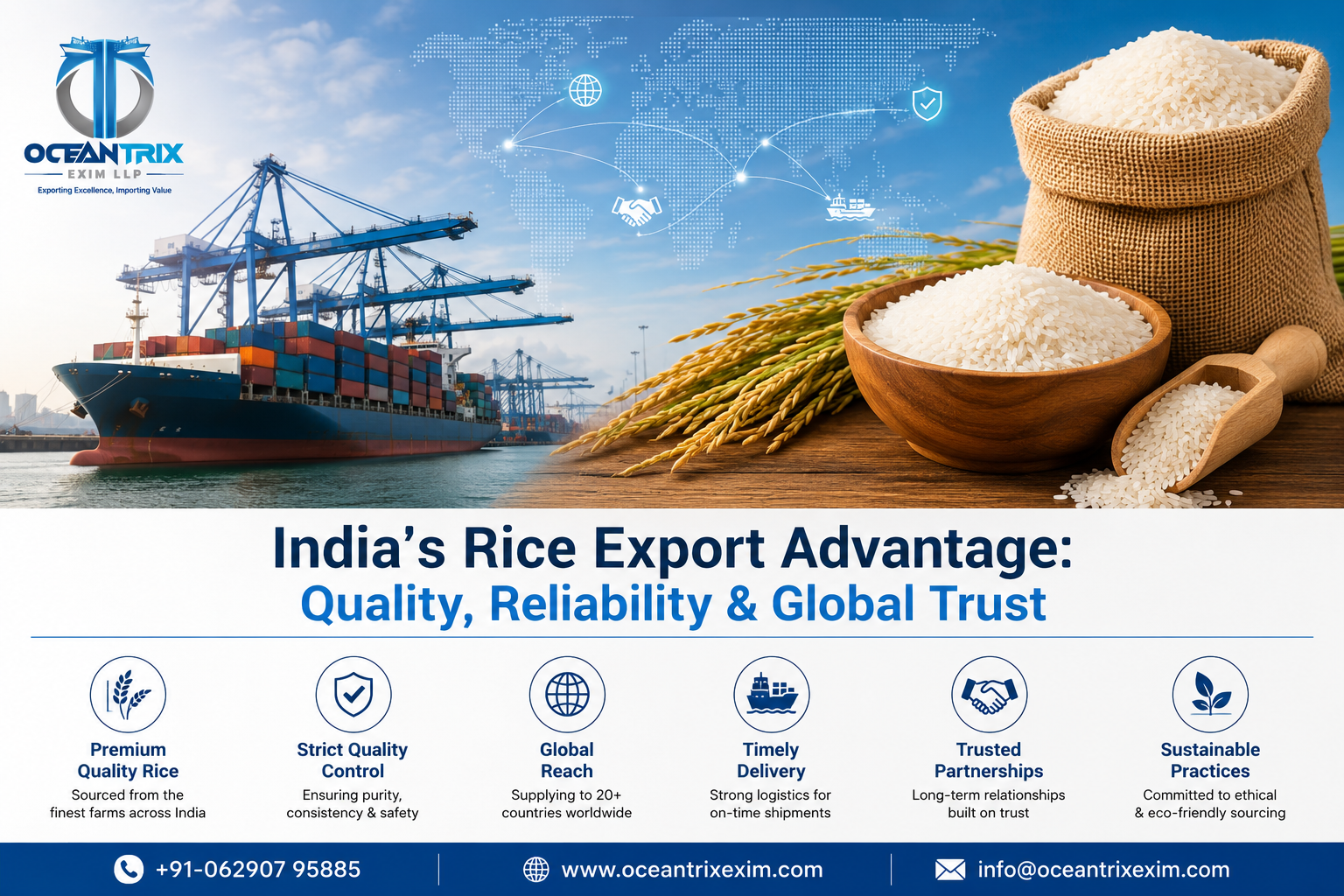
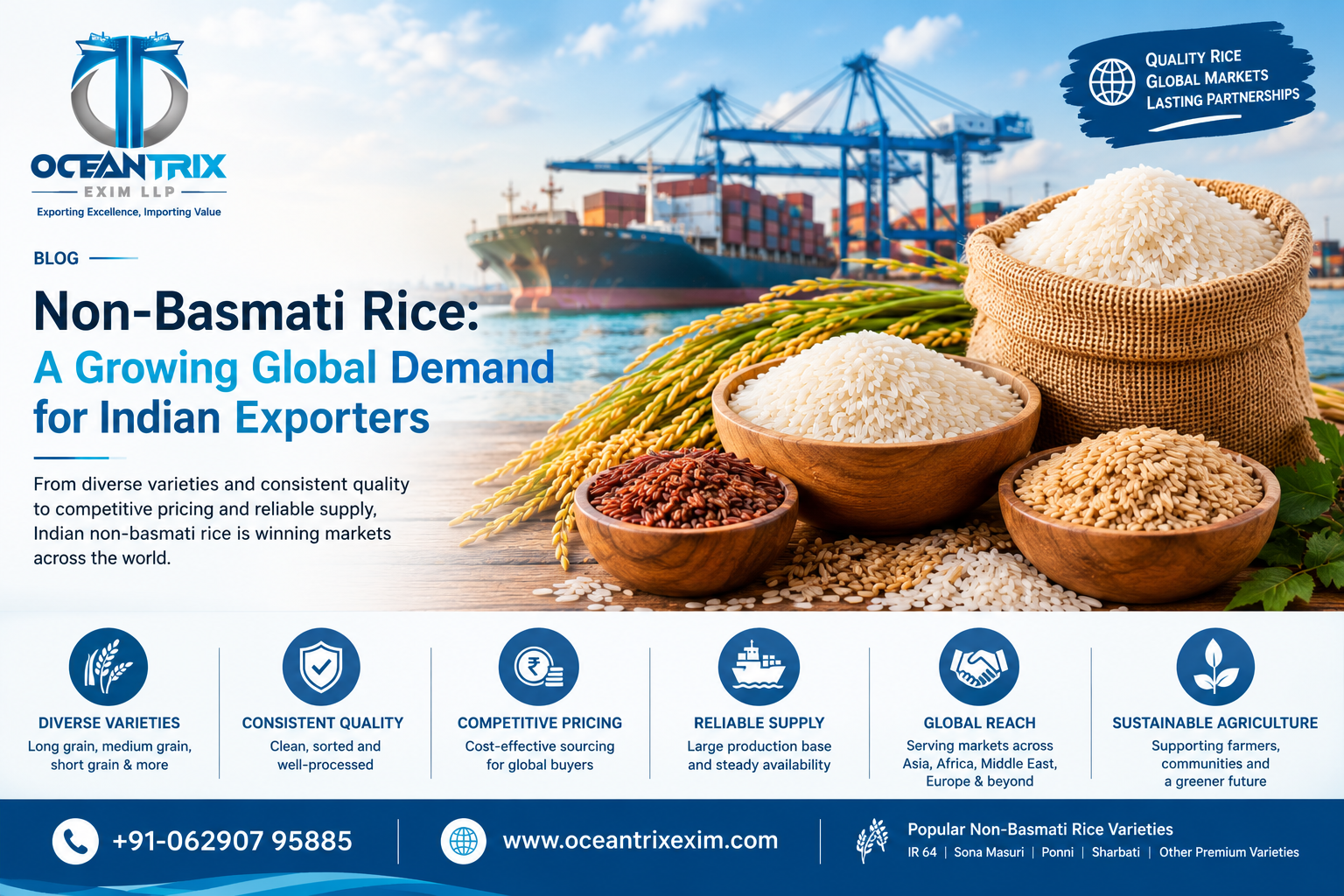
Rice remains one of the most important staple foods in international markets, supporting consumers, food distributors, wholesalers, retailers, and food-service businesses across different regions. While Basmati rice is widely associated with India’s premium rice exports, non-Basmati rice represents another significant opportunity within the country’s agricultural export industry.
For international buyers, non-Basmati rice offers access to diverse varieties, competitive sourcing opportunities, and large-scale supply. India’s extensive agricultural base and established export infrastructure have helped Indian rice exporters serve markets across Asia, Africa, the Middle East, and other international destinations.
For importers looking to establish dependable sourcing relationships, understanding the role of non-Basmati rice in India’s export ecosystem is increasingly important.
What Makes Non-Basmati Rice Important in Global Trade?
Unlike Basmati rice, which is particularly associated with its distinctive aroma and long grains, non-Basmati rice encompasses a much broader range of rice varieties and commercial requirements.
Different international markets have different preferences concerning grain size, texture, cooking characteristics, processing, packaging, and price. Non-Basmati rice allows buyers to source products suited to a wide range of consumer and commercial applications.
This diversity creates opportunities for rice exporters in India to serve multiple market segments rather than focusing exclusively on premium rice categories.
For wholesalers and importers, this can be particularly useful when developing product portfolios for different customer groups.
India’s Strong Agricultural Foundation
India’s agricultural strength is one of the major foundations behind its position in international rice trade. The country benefits from diverse geographical regions, different climatic conditions, extensive agricultural land, and a large farming network. These factors support the cultivation of a wide range of agricultural commodities throughout the year.
This production scale provides an important advantage for international rice buyers. Large-volume importers often require suppliers capable of supporting recurring orders rather than fulfilling only individual shipments.
For an established Indian rice exporter, a strong sourcing network can therefore help create greater supply flexibility and support different buyer requirements.
Diverse Varieties for Different Markets
One of the most important advantages of non-Basmati rice is variety.
International buyers may have different requirements depending on their target consumers and distribution channels. Some may prioritize long-grain characteristics, while others may require particular cooking properties, processing formats, or commercial price points.
This makes product selection an important part of the international procurement process.
A professional non-Basmati rice exporter in India can work with sourcing and processing partners to identify products that align with the buyer’s specifications.
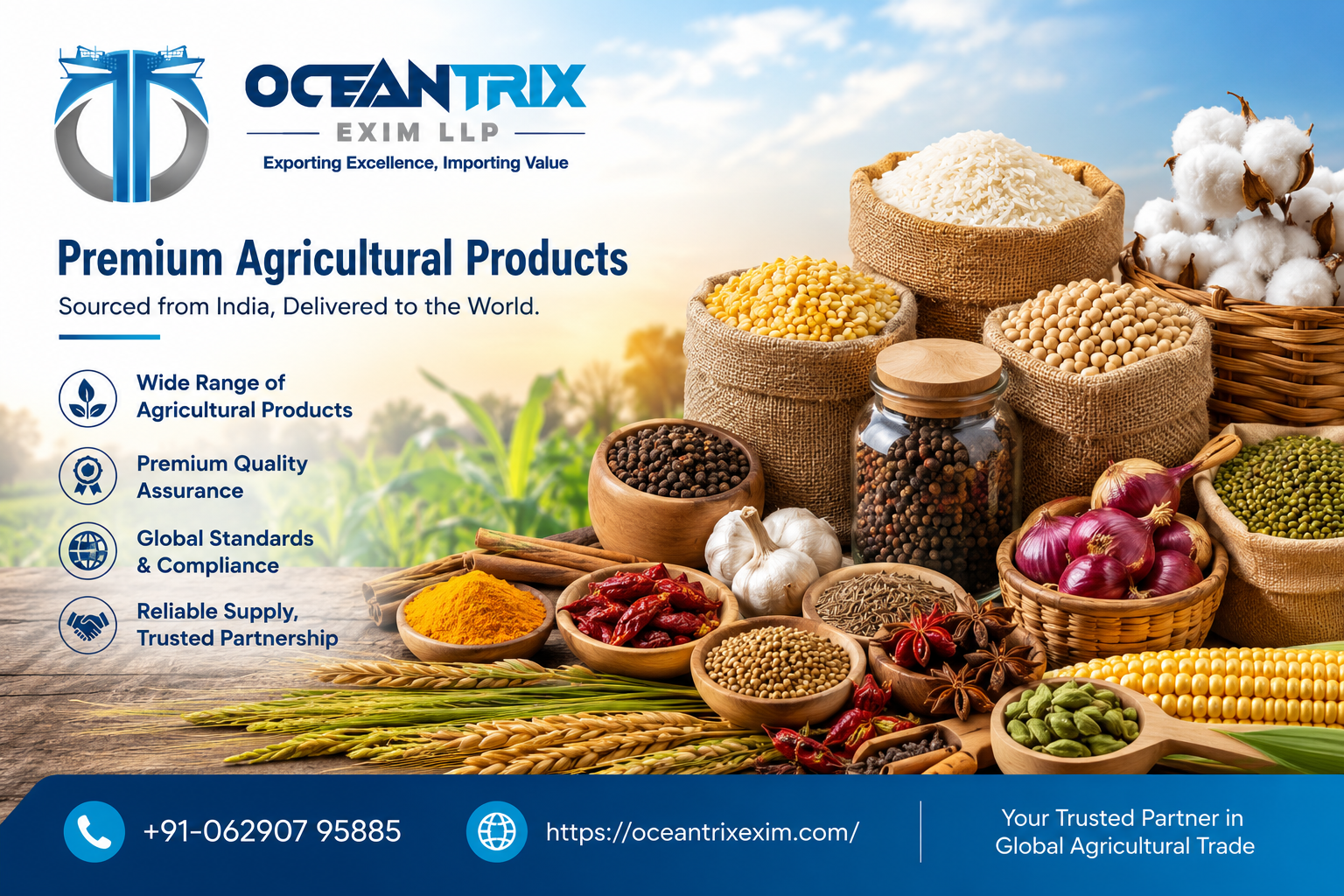
The broader agricultural ecosystem also allows importers to explore other Indian commodities alongside rice, including pulses, spices, cereals, oilseeds, tea, coffee, and other agricultural products.
Competitive Sourcing for International Importers
Price competitiveness is another important consideration in international rice procurement.
India’s large-scale agricultural production, extensive farming network, and established processing capabilities create opportunities for competitive sourcing. For businesses purchasing rice in commercial quantities, this can be an important factor when developing their international supply strategy.
However, successful rice procurement involves more than simply finding the lowest quotation.
Importers also need to consider product consistency, packaging, documentation, logistics, communication, and the supplier’s ability to support repeat orders. A competitive price becomes more valuable when combined with dependable service and consistent product quality.
Quality Remains Central to Non-Basmati Rice Exports
Quality assurance plays a major role in building confidence between exporters and international buyers.
Agricultural products can be affected by sourcing, processing, storage, and transportation conditions. As a result, quality needs to be managed throughout the supply chain rather than treated as a final-stage activity.
For non-Basmati rice, buyers may evaluate factors such as cleanliness, grain characteristics, processing quality, moisture management, packaging, and consistency between shipments.
Quality-focused exporters can work closely with suppliers and processing facilities to establish appropriate specifications before an order is confirmed.
International certifications and quality systems can also support buyer confidence. Depending on the product, supplier, and destination market, exporters may work with systems or certifications such as HACCP, ISO standards, Organic Certifications, and Good Agricultural Practices (GAP).
Reliable Supply for Bulk Rice Buyers
For international rice importers, supply reliability can be just as important as product quality.
A wholesaler or distributor may have established customer commitments that depend on receiving products within a particular timeframe. Unexpected supply disruptions can therefore create operational challenges.
India’s extensive agricultural production provides a substantial foundation for large-scale sourcing. Established export networks, processing facilities, warehouses, transportation systems, and ports further support international shipments.
An experienced rice exporter in India can coordinate these different stages to help buyers manage their procurement requirements more efficiently.
Logistics: Connecting Indian Rice With Global Markets
Rice export involves a coordinated chain of activities, beginning with sourcing and continuing through processing, packaging, warehousing, transportation, port handling, and international shipping.
India’s geographic position also provides established trade connections with markets across the Middle East, Asia, Africa, Europe, and other regions.
Strong logistics infrastructure helps exporters move agricultural products efficiently while supporting shipment planning and delivery coordination. Containerized transportation and modern warehousing further contribute to the international movement of agricultural commodities.
For overseas buyers, working with an exporter familiar with these processes can simplify international procurement.
Non-Basmati Rice and India’s Export Potential
The importance of non-Basmati rice extends beyond the product itself. It demonstrates the broader potential of India’s agricultural export ecosystem.
An importer may initially approach an Indian rice supplier for non-Basmati rice and later explore additional agricultural products through the same sourcing relationship.
This creates opportunities for consolidated procurement, where buyers can work with an export partner capable of connecting them with multiple product categories.
For businesses expanding their international food distribution networks, such supplier relationships can simplify communication and supply-chain coordination.
Why Choose an Experienced Indian Rice Exporter?
Selecting an export partner is an important part of international sourcing. Buyers generally need to evaluate several factors before establishing a long-term relationship.
These include:
- Product availability and variety
- Quality consistency
- Competitive sourcing
- Packaging requirements
- Export documentation
- Shipment coordination
- Communication and responsiveness
- Ability to support recurring orders
- Understanding of international buyer requirements
An experienced exporter can help bring these elements together into a more organized procurement process.
OceanTrix Exim LLP: Connecting Indian Rice With Global Buyers
OceanTrix Exim LLP focuses on connecting Indian agricultural products with international business opportunities. With an emphasis on dependable sourcing, quality-focused supplier relationships, and professional export coordination, the company supports businesses exploring agricultural procurement from India.
For buyers searching for non-Basmati rice exporters in India, OceanTrix Exim LLP provides an opportunity to explore sourcing relationships within India’s broader agricultural export ecosystem.
The company’s approach is aligned with its brand promise: “Exporting Excellence, Importing Value.”
By combining India’s agricultural capabilities with international trade coordination, OceanTrix Exim LLP aims to create lasting value for importers, distributors, wholesalers, and business partners.
Conclusion
Non-Basmati rice represents an important segment of India’s agricultural export industry. Its diverse varieties, broad market applications, competitive sourcing opportunities, and large production base make it relevant to international buyers with different procurement requirements.
For global importers, the right rice exporter in India should offer more than a product quotation. Quality, consistency, supply reliability, documentation, logistics, and communication all contribute to a successful import-export relationship.
As international markets continue to seek dependable agricultural suppliers, India’s non-Basmati rice sector provides significant opportunities for exporters and global buyers alike.
OceanTrix Exim LLP aims to bridge this opportunity by connecting Indian agricultural excellence with international demand and building business relationships around quality, reliability, and long-term value.